Choose a Toothbrush and Toothpaste
Start with a soft-bristled brush whose head and handle let you reach your teeth comfortably. A manual brush and an electric brush can both be effective. Choose one you can control and use thoroughly, rather than judging it only by the price or the number of features.
Fluoride toothpaste matters because it helps protect against tooth decay. Read the label instead of choosing only by flavour, packaging or a whitening claim. If you are unsure which toothpaste suits your needs, ask a dentist; extra-strength products should follow individual advice.
Before buying, consider the ongoing routine too. Can you comfortably hold the brush? Can you get replacement heads when needed? Will charging an electric model fit your setup? These practical questions are more useful than assuming the most expensive option is automatically right for you.
Brush Gently and Reach Every Surface
For a manual brush, the aim is controlled contact with each surface, not forceful scrubbing. Use a mirror and a consistent route around your mouth if that helps you notice areas you tend to skip.
- Angle towards the gumline. Hold the bristles at about 45 degrees to the gums and use gentle, short back-and-forth strokes.
- Cover all the surfaces. Work along the outside, inside and chewing surfaces. Include the back teeth rather than spending most of the time on the visible front teeth.
- Adjust at the front. To clean the inner surfaces of the front teeth, hold the brush more vertically and use gentle up-and-down strokes.
- Follow your electric brush instructions. Head movements differ between models, so check how to position and guide yours. Do not assume that vigorous manual scrubbing is needed.
If an area is difficult to reach, ask a dentist to demonstrate with your own brush. A practical adjustment may be more helpful than buying another device without understanding the difficulty.
Build Consistency Around the Basics
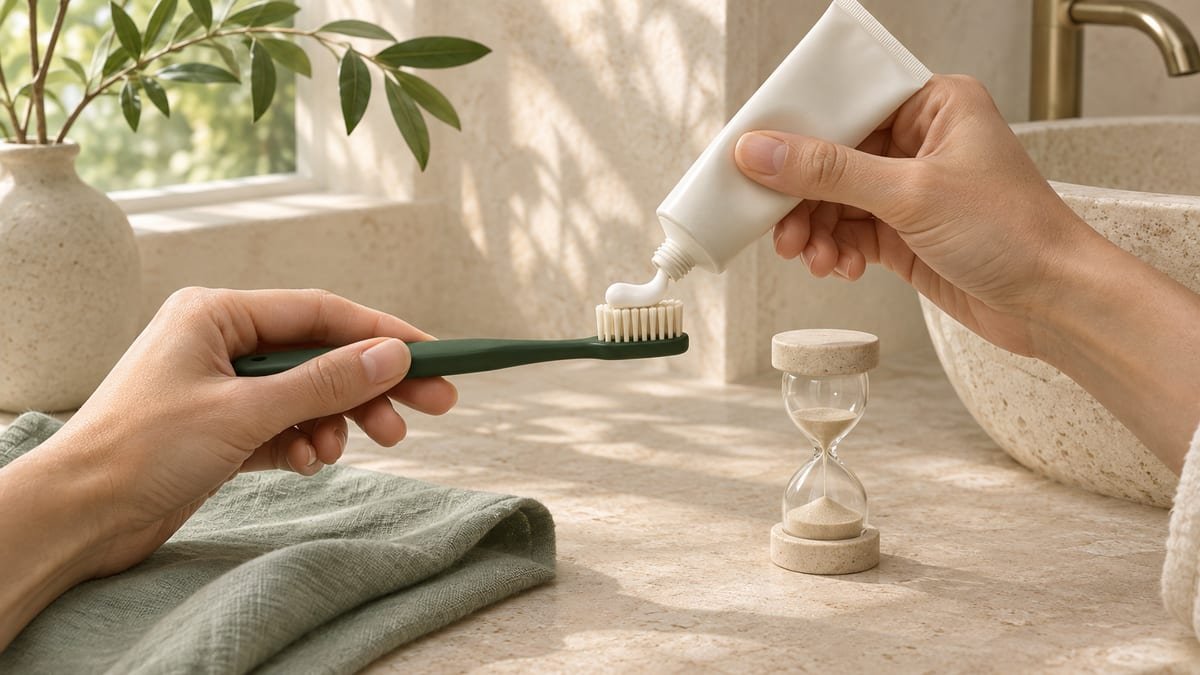
Give each clean enough attention to cover the whole mouth. A simple timer can help you keep track of about two minutes without rushing or guessing. The twice-daily brushing guide explains how to place those cleans in your day.
Choose one improvement you can repeat: following the same route around your teeth, checking the inside surfaces in the mirror or keeping replacement heads with your toiletries. A useful routine should be workable on an ordinary busy day, not only when you have just bought something new.
Brushing also needs support from cleaning between teeth and dental advice. Read the wider oral-care routine for the other parts of looking after teeth and gums.
Store and Replace Your Toothbrush
Rinse the brush after use and store it upright so it can air-dry. Do not share it. Replace the brush or electric head about every three to four months, or sooner if the bristles become frayed or matted.
Notice the condition of the bristles as well as the date. If they wear out quickly or you are unsure about pressure, ask for a technique check. Our guide to preventive dental care explains how individual advice fits alongside daily habits.
Questions About Brushes and Technique
Do hard bristles clean better?
Harder bristles are not the goal. A soft-bristled brush used with gentle pressure is recommended to help limit injury to the gums. Thorough cleaning comes from reaching each surface carefully, not from pressing harder.
Is an electric brush worth choosing?
Both manual and electric brushes can be effective when used properly. An electric brush may be easier to use if holding or moving a manual brush is difficult. Consider handling, replacement-head costs and your dentist’s advice.
Can I keep a brush if only a few bristles are splayed?
Replace the brush or head when bristles are visibly frayed or matted, even before three to four months. Worn bristles do not clean as effectively.
Ask for a Demonstration That Fits You
Bring your brush, or a photo of it, and the name of your toothpaste to a dental visit. Explain any awkward areas, discomfort or handling difficulties so you can discuss a manageable approach.
Prepare for a dental visit Back to all oral-care guidesFurther reading: ADA guidance on toothbrushes and NHS guidance on keeping your teeth clean.